
Articulation Practice Mirror
See your mouth move — visual feedback for sound placement
Before starting: Introduce one supplement at a time, observe for 2–4 weeks, and always consult your SLP or clinician. Never stack multiple folate/methylated supplements without guidance.
Mirror + Articulation Practice for Clear Speech Sounds
A simple mirror paired with an articulation practice routine helps many kids learn mouth placement and sound shaping at home. Seeing the lips, tongue, and jaw makes “watch my mouth” cues more concrete—especially for early speech sound targets like /p/ /b/ /m/, /t/ /d/, and /k/ /g/.
Quick Take
- Best for: articulation practice, sound placement, “watch my mouth” learning
- Supports: consistent home practice, clearer speech sounds, confidence
- Parent tip: use your SLP’s target list and keep practice to 3–5 minutes
About This Item
- Learn letter sounds: Students can use the phonics flash cards built into the set to mirror the picture sound on the card to help practice each sound.
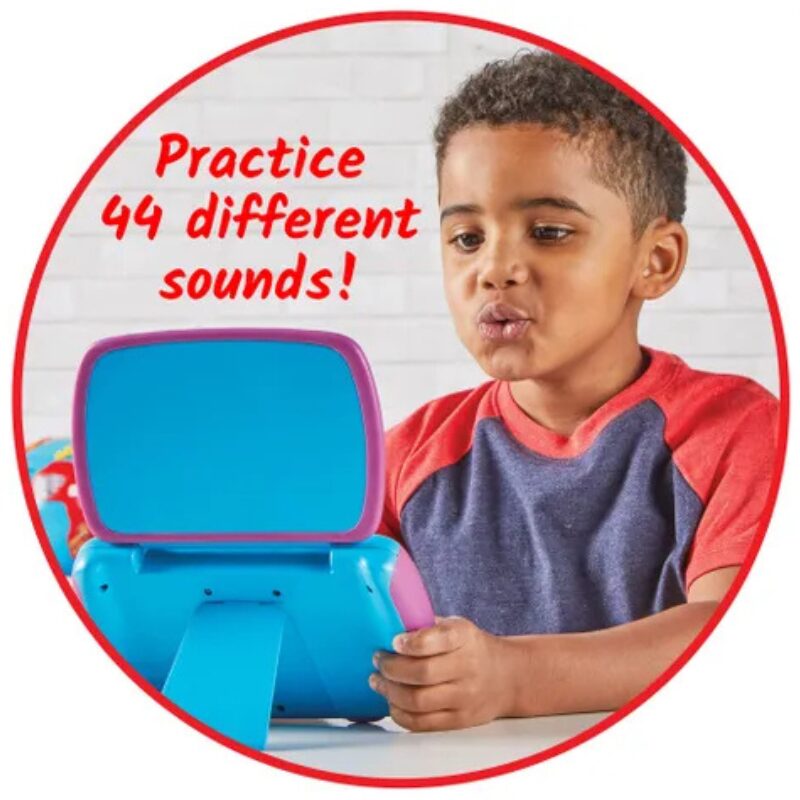
- Speech therapy tool: Children can practice making 44 sounds of the English language with this easy-to-use set.
- Phonemic awareness: Use the included booklet to see mouth/tongue position for each sound while the mirror helps children see themselves.
- Phonics manipulative: Helpful for supplementing phonics education at home.
- Kid-friendly: Built durably and conveniently sized for easy storage.
What is mirror articulation practice?
Mirror articulation practice uses a mirror so your child can see how their mouth moves while making speech sounds. Parents often search terms like “speech therapy mirror practice”, “articulation mirror for kids”, or “how to teach sound placement at home”.
A mirror doesn’t replace therapy—think of it as a simple tool that makes practice easier and more consistent between sessions. Many kids respond well when they can “match” what they see (your mouth) to what they do (their mouth).
Why a mirror can help kids learn speech sounds
Some kids struggle because they can’t feel or picture where sounds are made. A mirror makes invisible movements visible:
- Lip sounds: /p/ /b/ /m/ (“lips together”)
- Front tongue sounds: /t/ /d/ /n/ (“tongue taps behind teeth”)
- Back sounds: /k/ /g/ (“tongue back”) — harder to see but routines still help
The biggest win is often consistency: a mirror makes it easier to repeat the same target sound the same way every day—without turning it into a battle.
Who benefits most from mirror practice?
- Kids working on articulation (speech sound clarity)
- Children who need strong visual cues to learn
- Kids who do better with short, structured routines
- Families who want a simple at-home tool between therapy sessions
How to do mirror articulation practice at home
Keep it short, repeatable, and predictable. The goal is daily exposure, not long sessions.
A simple 5-minute mirror routine
- Set up (30 seconds): sit together, mirror facing your child, good light
- Warm-up (1 minute): “copy me” faces (smile, kiss, open/close) — keep it fun
- Target sound (2 minutes): practice your SLP’s sound using 5–10 easy repetitions
- Word practice (1 minute): 3–5 words with the sound (example: “moo,” “me,” “my” for /m/)
- Finish (30 seconds): praise + stop while it’s still easy
If your child needs extra motivation or choice-making, pairing this with visual cards can help (“more,” “break,” “all done”).
Sound placement tips parents actually use
- Use one cue: “lips together” or “tongue tap” (don’t stack 5 instructions)
- Model slowly: exaggerate your mouth for the target sound
- Short bursts: 5 good tries beats 25 frustrated tries
- Consistency wins: daily 3 minutes beats weekly 30 minutes
Common mistakes (and easy fixes)
- Mistake: correcting every attempt → Fix: pick one target and praise effort
- Mistake: long sessions → Fix: set a timer for 3–5 minutes
- Mistake: practicing when dysregulated → Fix: regulate first (see below)
Make practice easier by supporting regulation first
If your child is sensory-seeking or easily distracted, practice goes better when their body is calm. Some families pair mirror practice with:
- Chew necklace (chewelry) for oral sensory regulation
- Noise-reducing headphones for focus in loud environments
- Bubble play for quick “ready to work” engagement
Safety & use notes
- Use a shatter-resistant mirror (or child-safe handheld mirror).
- Keep practice positive—stop before frustration spikes.
- If your child has feeding/oral-motor concerns, follow your SLP/OT’s guidance.
Common questions parents search
- “How do I practice articulation at home?” — short daily routines with a mirror work well for many families.
- “Does mirror practice help speech?” — it can support visual learning for mouth placement and sound shaping.
- “How long should speech practice be?” — many kids do best with 3–5 minutes, repeated often.