Bubbles for Speech Therapy Oral Motor Practice at Home
⚠️ Medical Disclaimer: The information on this page is for educational purposes only and is not a substitute for professional medical advice, diagnosis, or treatment. Supplements are not intended to diagnose, treat, cure, or prevent any disease. Always consult a qualified Speech-Language Pathologist (SLP), pediatrician, or clinician before starting any supplement — especially for children.
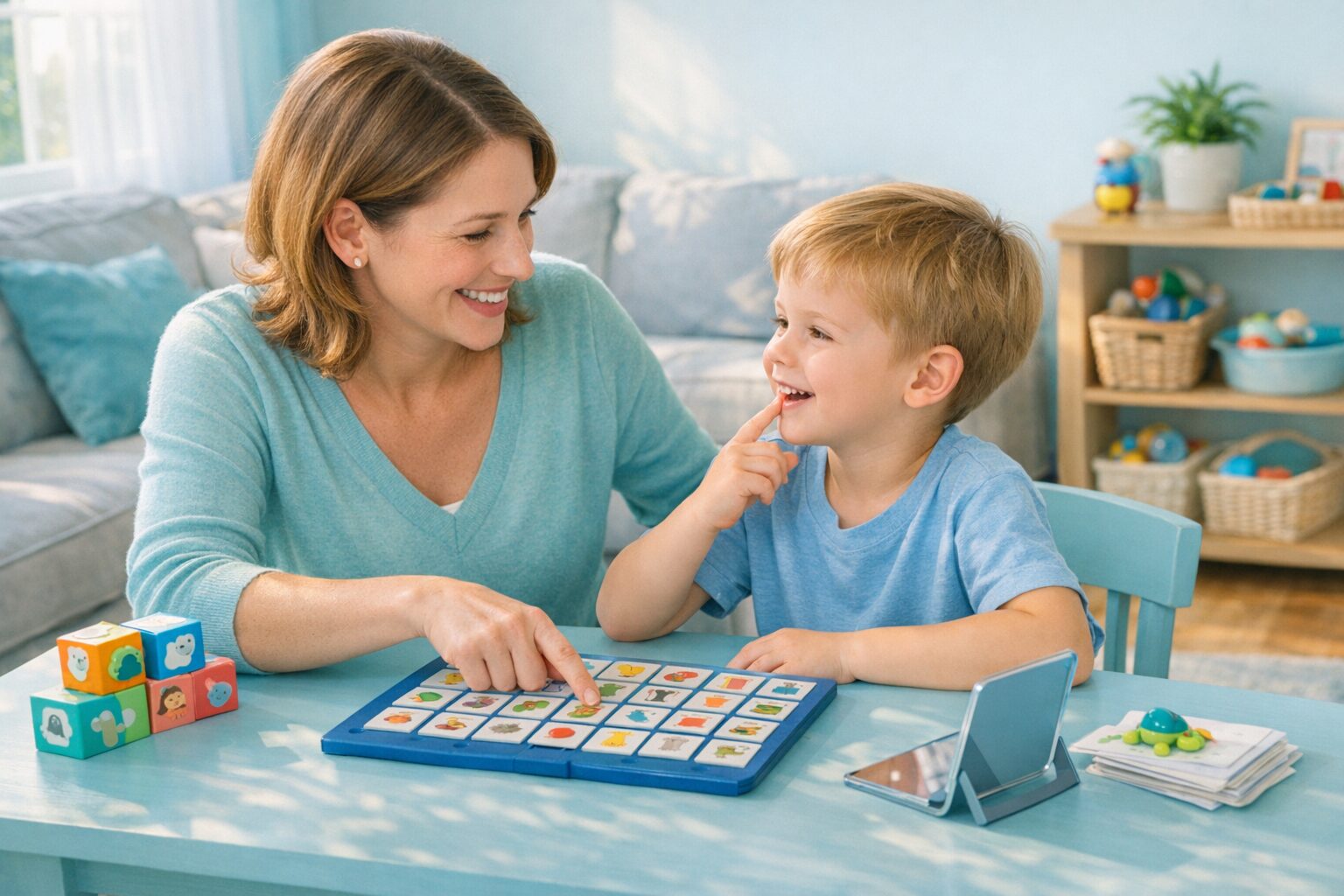
If you’ve ever watched your child light up when a bubble floats past, you already know you’re holding a powerful tool. Bubbles are simple, joyful, and surprisingly effective for practicing breath control, lip rounding, and turn-taking. When therapists use bubble play in sessions, kids engage without feeling pressured. Therefore, bringing “bubbles speech therapy oral motor” practice into your home can make carryover feel natural and fun in 2026.
Below you’ll find our favorite bubble and blowing tools for home practice, plus tips that help you get the most from a few minutes a day. Because every child is different, we also offer sensory and visual support ideas and gentle ways to scaffold success. Moreover, we’ve included links to our trusted guides so you can explore complementary supports as you build a home routine.
Best Products for Bubbles Speech Therapy Oral Motor
| Product | Best For | Why It Helps | Link |
|---|---|---|---|
| Bubble Set | All-around home bubble play | Encourages lip rounding and graded breath control while keeping practice playful. | View on Amazon |
| Bubble Set Speech Therapy | Variety and multi-wand options | Different wand sizes prompt kids to adjust airflow, pacing, and mouth shape. | View on Amazon |
| Blow Pipe Balls | Targeted, controlled breaths | Floating balls give instant feedback for steady, sustained exhalation. | View on Amazon |
| Whistle Set Oral Motor | Building power and stamina | Progressive whistles require stronger or longer airflow to make sound. | View on Amazon |
Related Guides You Might Find Helpful for Bubbles Speech Therapy
Bubble Set for Bubbles Speech Therapy Oral Motor Play
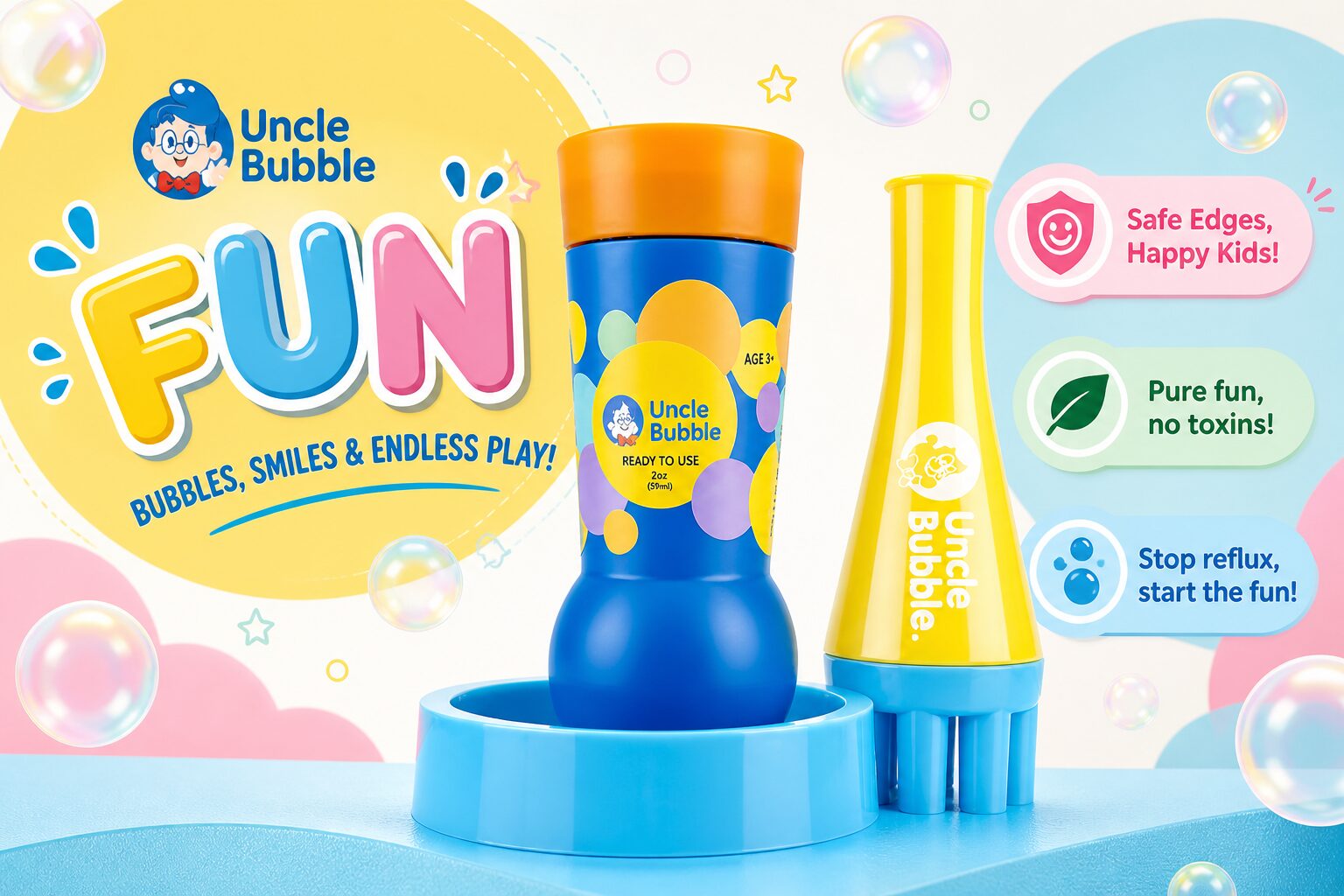
This classic bubble kit is the easiest way to turn a few minutes into meaningful practice. With a reliable wand and solution, you can focus on breath control, lip rounding, and simple sound play. Because bubbles are instantly rewarding, kids naturally try again and again. Consequently, you get many repetitions without nagging.
Why bubbles speech therapy oral motor play works
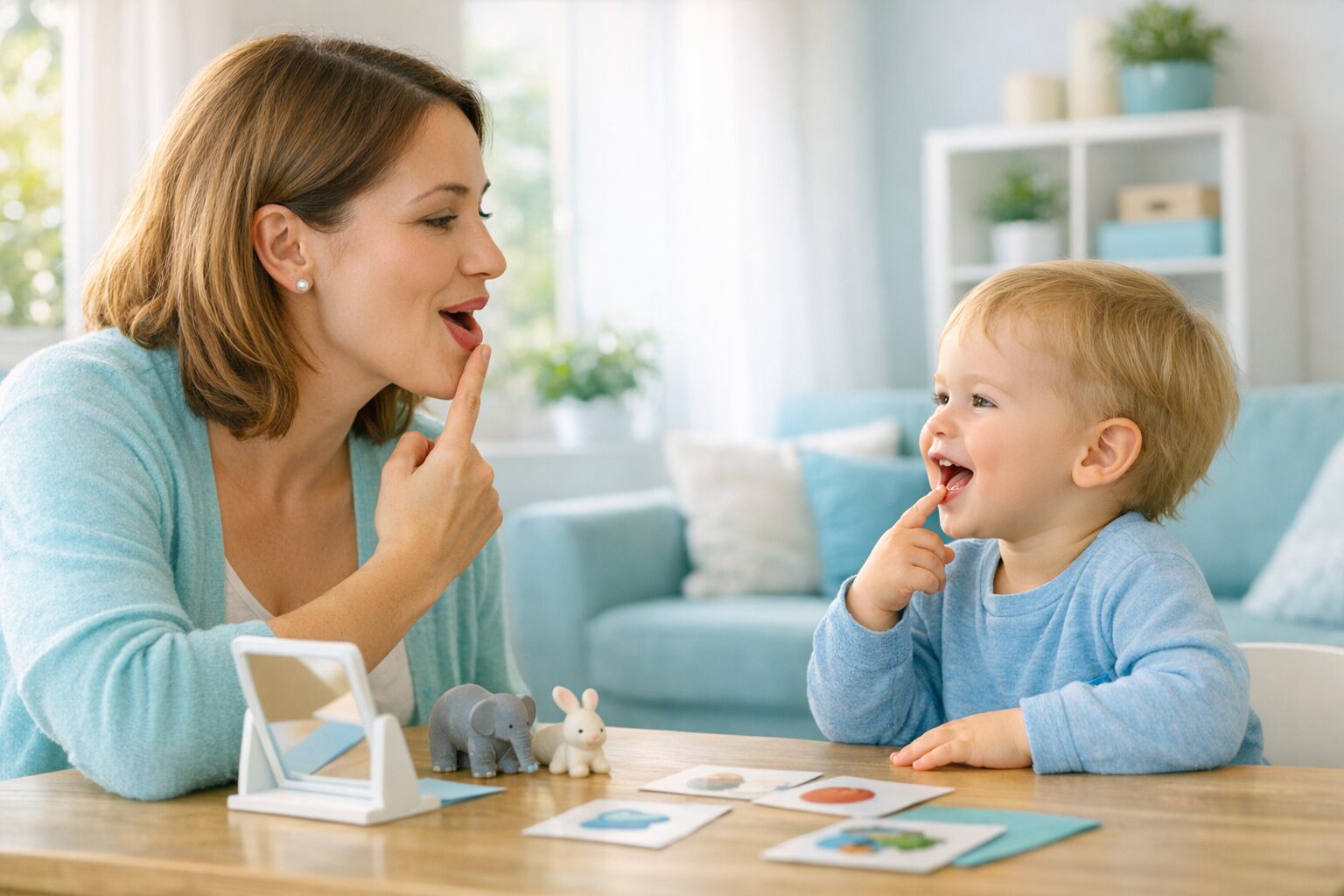
Bubbles invite a slow, steady exhale. Moreover, even reluctant talkers often imitate “pop,” “more,” or early sounds like /p/, /b/, and /m/ while reaching or pointing. While we never force, we can model words and gestures as we blow. Additionally, pairing bubble play with an articulation mirror helps kids see lip rounding and jaw stability.
Practical setup and simple routines for Bubbles Speech Therapy
Try a 3–5 minute routine: “Ready, set…” pause for your child’s eye contact or gesture, then blow one or two bubbles. Furthermore, count slowly together as bubbles float, then cue “pop, pop” with fingers. If your child is noise-sensitive, consider noise-reducing headphones during high-energy play.
Layer language without pressure for Bubbles Speech Therapy
Model choices and early requests: “big bubble or little bubble?” “more or all done?” Therefore, visuals like picture communication cards or first words board books and cards can offer a bridge between play and communication.
- Pros: Instant feedback, highly motivating, easy to use, great for joint attention and turn-taking.
- Cons: Can be messy indoors; solution spills; some kids may try to drink or chew the wand.
- Best for: Toddlers and preschoolers who benefit from playful breath practice and early sound modeling.
Bubble Set → Check price on Amazon
Bubble Set Speech Therapy Variety Pack for Bubbles Speech Therapy
A multi-wand set adds progression. Different wand sizes and shapes subtly change the airflow requirement, which encourages kids to experiment with slow versus fast breaths. Therefore, you can scale difficulty without nagging, simply by switching wands.
Building a bubbles speech therapy oral motor progression at home
Start with a larger wand for easier bubbles and quick confidence. Then, shift to smaller wands for more precise lip rounding and breath control. Additionally, use countdowns like “3…2…1…blow” to pace exhalation. Consequently, children learn to control timing as much as power.
Smart supports for sensory seekers and chewers for Bubbles Speech Therapy
If your child mouth-seeks or chews wands, redirect to a safe oral fidget, such as a chew necklace, between turns. Furthermore, keep a towel nearby to handle drips so play continues with minimal disruption. For kids who love visuals, pair with picture communication cards to model “help,” “turn,” or “more.”
- Pros: Multiple wands for graded challenge, fun shapes, easy to swap for fresh motivation.
- Cons: More pieces to track; some novelty wands can be flimsy; solution quality varies.
- Best for: Families who want a single kit that grows with the child’s skills over time.
Bubble Set Speech Therapy → Check price on Amazon
Blow Pipe Balls for Controlled Airflow
These simple tubes with lightweight balls are perfect when you want immediate, visual feedback on breath strength and steadiness. When the ball floats, your child sees and feels success. As a result, they learn to sustain exhalation without over-blowing.
Targeted bubbles speech therapy oral motor practice
Although not bubbles, floating ball blow pipes mimic the same core skill: a steady, purposeful airstream. Moreover, they are less messy, which is helpful for quick bursts of practice before meals or bedtime. Additionally, the ball’s height mirrors exhale intensity, so you can cue “gentle” or “long” instead of “harder.” Read more: Speech Therapy at Home: Activities Your SLP Recommends
Make it playful and language-rich
Try “keep it up” games with a 5–10 second timer. Furthermore, alternate turns and narrate: “My turn, your turn, we take turns.” If your child benefits from self-monitoring, use an articulation mirror to watch lip rounding and relaxed cheeks for a smooth airflow.
- Pros: Clear visual feedback, portable, no spills, great for graded control.
- Cons: No bubbles; some kids prefer the magic of bubble pop; plastic tubes require cleaning.
- Best for: Kids who need precise control practice or a less-mess option for daily routines.
Blow Pipe Balls → Check price on Amazon
Whistle Set Oral Motor for Breath Support
Whistles convert breath to sound, which can be very motivating. Because different whistles require different airflow, you can build stamina and control in small steps. Consequently, kids learn to modulate volume and duration as they play.
Translating bubbles speech therapy oral motor skills into sound
Whistles pair beautifully with bubbles; one focuses on visual feedback, the other on auditory feedback. Moreover, whistles help with sustained exhale for longer phrases later on, while bubbles keep the practice gentle and game-like. Additionally, play short “sound versus silence” games to practice on/off control.
Layer turn-taking and simple language
Use starter phrases: “Ready…go!” “Stop.” “More.” “Loud?” “Quiet?” Therefore, you’re reinforcing regulation and communication at the same time. If your child is sound-sensitive, introduce at a distance first and consider noise-reducing headphones for comfort.
- Pros: Highly engaging, easy progression, clear feedback through sound.
- Cons: Can be loud; not ideal for quiet times; some designs are harder to clean.
- Best for: Kids who love cause-and-effect sound play and need breath power or stamina practice.
Whistle Set Oral Motor → Check price on Amazon
Oral Motor Exercise Kit for Bubble-Adjacent Skills
A well-rounded kit often includes straws, horns, and graded blow tools. Although it’s not a bubble set, it supports the same foundational skills: controlled exhale, lip closure, and jaw stability. Furthermore, it’s ideal when you want multiple textures and resistances to keep practice fresh.
Bridging bubbles speech therapy oral motor play to daily life
Use a straw hierarchy with water or smoothies to promote lip seal and midline control. Additionally, alternate days with bubbles or blow pipes to keep interest up and prevent fatigue. Consequently, you’ll address similar muscles in varied, age-appropriate ways.
Pair with visuals and books
For kids who thrive with structure, a simple two-step visual from picture communication cards can cue “sit, blow.” Moreover, bring language into the routine with cozy shared reading using first words board books and cards right after practice.
- Pros: Versatile tools, easy to individualize, supports carryover beyond bubble play.
- Cons: More parts to sanitize; guidance may be needed to choose the right level.
- Best for: Parents who want a single set to rotate alongside bubble sessions for variety.
Oral Motor Exercise Kit → Check price on Amazon
How to Choose the Right Bubble Toys for Oral Motor
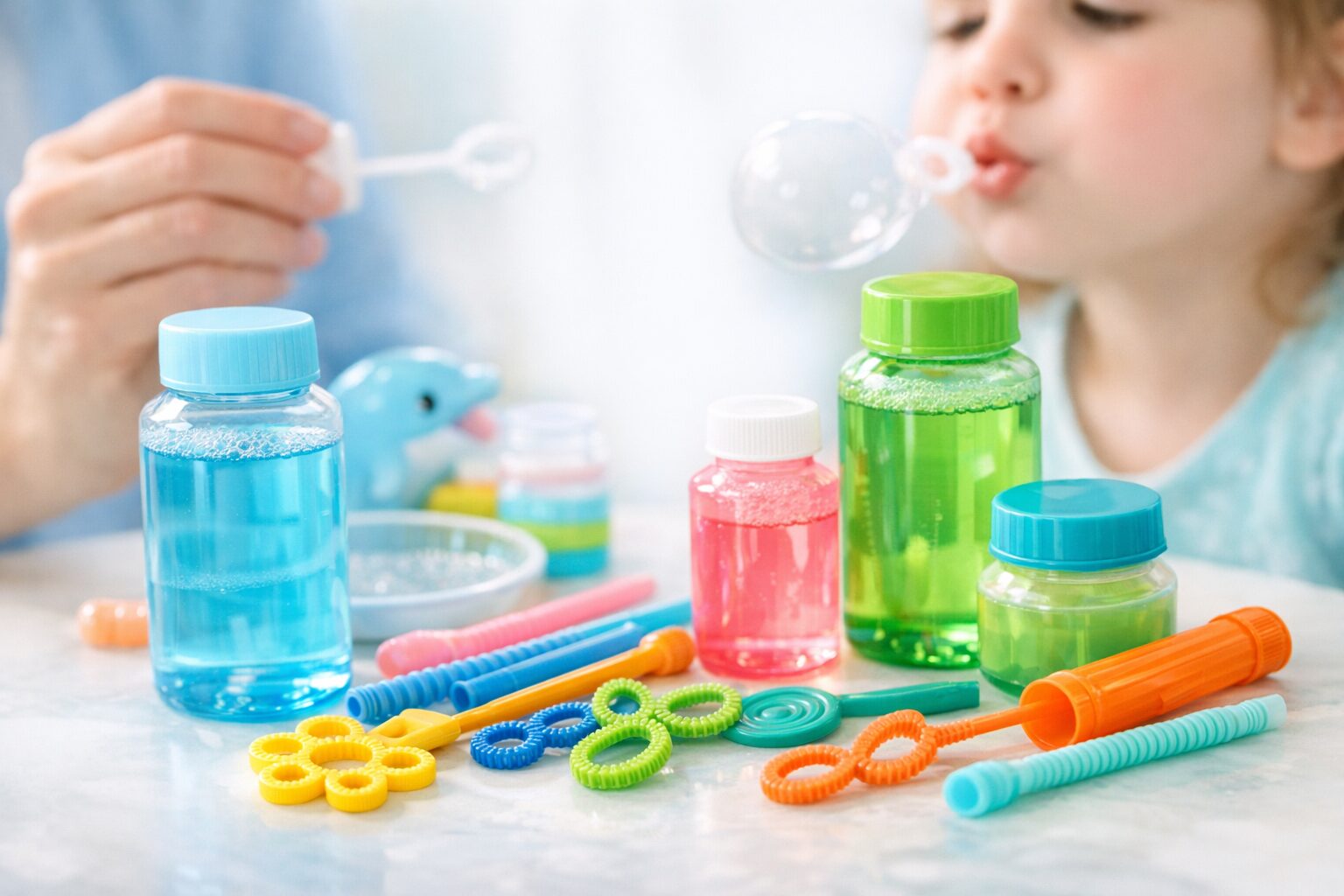
Choosing bubble tools is simpler when you match features to your child’s needs and your space. Consider solution quality, wand variety, cleanup, and sensory preferences. Additionally, think about how you’ll build a short routine you can keep, because consistency beats intensity for home carryover.
Key features for bubbles speech therapy oral motor practice
- Solution quality: A good solution produces bubbles with minimal effort. Consequently, early success builds motivation.
- Wand variety: Multiple sizes add natural progression for airflow control and lip rounding.
- Ease of cleanup: Spill-resistant containers or outdoor-friendly sets reduce stress and keep play going.
- Portability: Smaller bottles or lid-trays are great for quick practice during backyard time.
- Durability: Thicker wands withstand eager hands; fewer breaks mean fewer interruptions.
Safety and sensory considerations
- Sensory comfort: Some kids love the feel of bubbles popping; others prefer distance. Therefore, adjust positioning and consider noise-reducing headphones if needed.
- Oral-seeking safety: Redirect chewing to a safe chew necklace so wands stay intact and sanitary.
- Hygiene: Assign each child their own wand and label it; clean tools after sessions to prevent irritation.
Make it part of a whole-child routine
Some families also explore supportive nutrition and sensory strategies to help regulation around practice times. While every child is unique, you can learn about options like omega-3 (DHA/EPA), magnesium glycinate, and a kids probiotic in our guides. Additionally, for families exploring folate-related topics, see Dr. Frye’s folate article and the book The Folate Fix for further reading. You can also get to know our team and approach on about us and browse practical tips on our blog.
Common Mistakes to Avoid
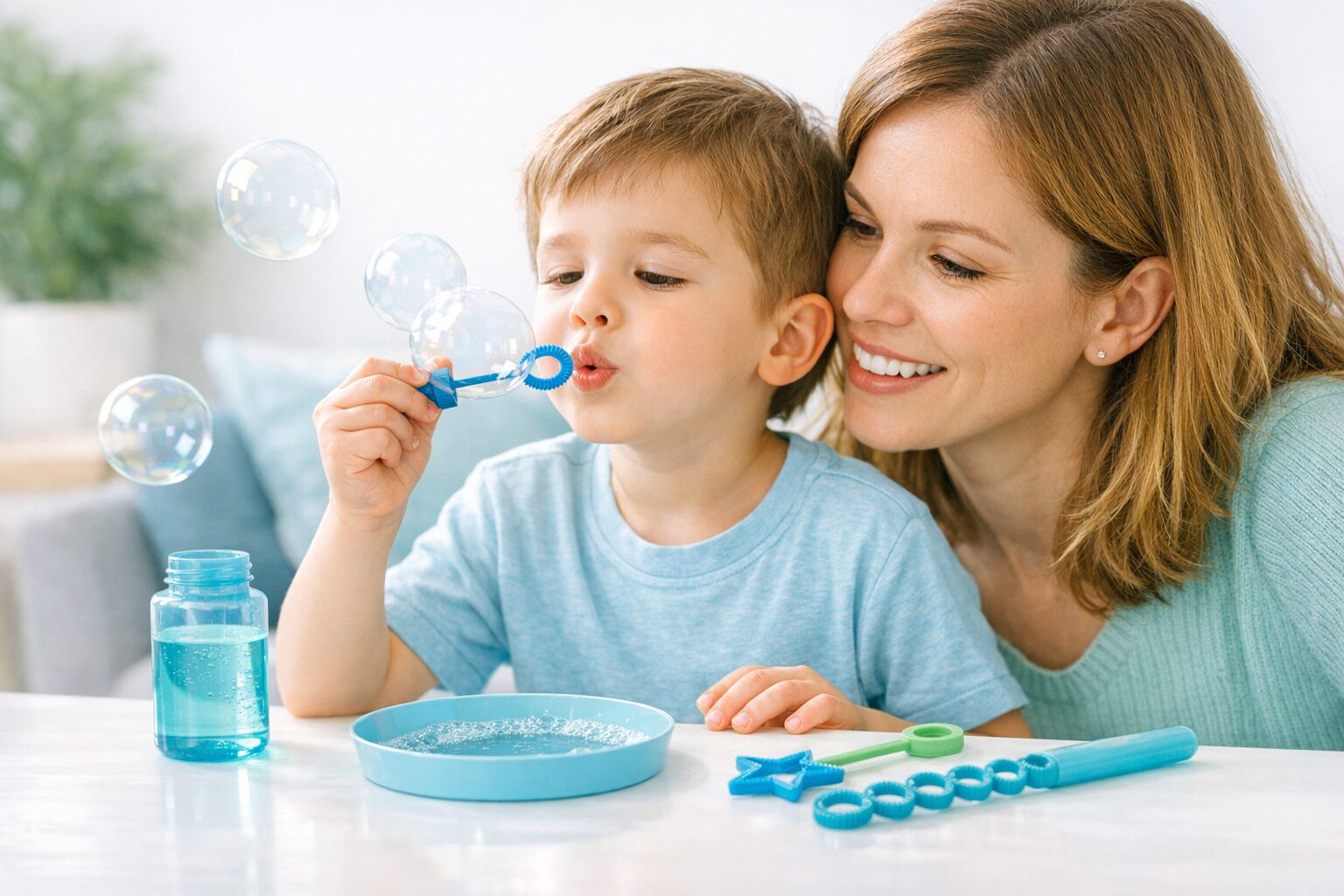
Even well-intentioned bubble play can stall if a few common pitfalls slip in. Fortunately, small tweaks can keep sessions calm, motivating, and effective.
Overfilling the session
It’s tempting to squeeze in “one more turn,” but short, predictable routines often work best. Therefore, aim for 3–7 minutes with a clear beginning and end.
Blowing too hard, too soon
Big breaths can lead to drool, frustration, or dizziness. Instead, model a gentle, slow exhale first. Moreover, use bigger wands initially to reduce effort.
Skipping visuals and models
Children often benefit from seeing what to do. Consequently, add an articulation mirror or a simple two-step visual from picture communication cards to clarify expectations.
Turning it into a test
When kids sense pressure, motivation fades. Therefore, keep it playful and follow your child’s lead. Additionally, reward attempts, not just outcomes.
Neglecting hygiene
Sharing wands or skipping cleanups can irritate lips and mouths. Moreover, assign individual wands, rinse after use, and dry thoroughly.
Forgetting regulation
Some days are loud or overstimulating. Consequently, reduce noise, use noise-reducing headphones, or shift outside to a calmer space.
FAQ
How often should we practice bubbles speech therapy oral motor play?
Consistency matters more than duration. Therefore, aim for brief daily bursts—3 to 7 minutes—tied to routines like backyard time or after snack.
What words or sounds should I model during bubble play?
Keep it simple: “pop,” “up,” “big,” “more,” “go,” “stop,” and animal sounds. Additionally, pause to invite a look, gesture, or attempt before you blow again.
My child tries to drink the solution. What should I do?
Gently redirect with “for blowing only” and offer a chew necklace or a water straw break. Moreover, supervise closely and switch to blow pipes if needed.
Are blow pipes and whistles as helpful as bubbles?
They target related skills: sustained, controlled airflow and lip positioning. Consequently, many families rotate among bubbles, blow pipes, and whistles to keep interest high.
How do I keep mess and spills under control?
Use outdoor spaces when possible, choose spill-resistant containers, and keep a towel ready. Additionally, set the bottle in a shallow tray to catch drips.
How can I add visuals or AAC to bubble time?
Place a small choice board from picture communication cards nearby with “more,” “help,” and “all done.” Furthermore, model each tap before the action.
What if my child is sensitive to sounds or popping?
Increase distance, pop fewer bubbles, and introduce sound gradually. Additionally, consider noise-reducing headphones while you build comfort.
Final Verdict
Bubbles are delightfully simple, yet they invite the very skills many kids need: steady breath, lip rounding, and patient turn-taking. When you choose tools that match your child’s interests and your routine, “bubbles speech therapy oral motor” practice can slip easily into daily life. Moreover, rotating bubbles with blow pipes and whistles sustains motivation while gently building control. In 2026, we continue to see that a few playful minutes done consistently can make home practice feel doable—and even joyful.
Explore More in Oral-Motor & Articulation
Browse all 2 parent guides, product reviews and research summaries in this category.
Browse All Articles →