
Noise Reducing Headphones for Kids with Autism Sensory Guide
⚠️ Medical Disclaimer: The information on this page is for educational purposes only and is not a substitute for professional medical advice, diagnosis, or treatment. Supplements are not intended to diagnose, treat, cure, or prevent any disease. Always consult a qualified Speech-Language Pathologist (SLP), pediatrician, or clinician before starting any supplement — especially for children.
If loud cafeterias, gym classes, or crowded stores send your child into sensory overload, you are not alone. Many families tell us the day turns around once their child has the right noise protection. Thoughtful, child-sized noise reducing headphones can soften the world’s sharp edges so kids can join more moments rather than avoid them. In 2026, there are more choices than ever, which is encouraging; however, it can also feel overwhelming.
Below, we break down the best options for real-life use, plus a parent-tested guide to sizing, fit, and comfort. Because every child’s sensory system is unique, we also include calming add-ons that pair well with headphones. Additionally, we’ll share simple routines to help your child signal when sounds feel “too big,” using visual supports you may already love.
For a deeper overview of features, sizing, and classroom tips, you can also visit our in-house resource on noise-reducing headphones. Furthermore, if your child benefits from multiple sensory tools, pairing headphones with a chew necklace or simple picture communication cards can make transitions smoother.
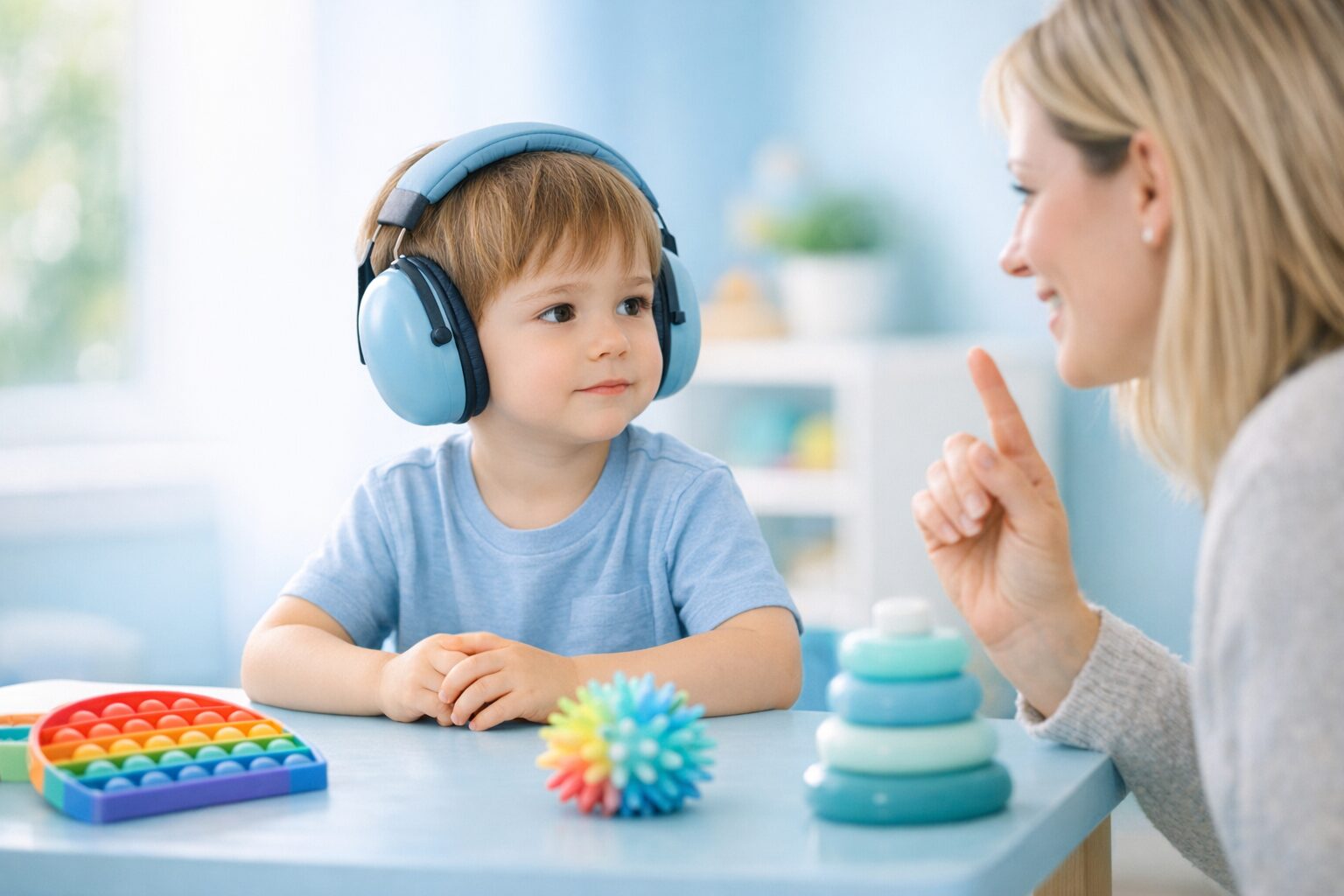
Best Products for Noise-Reducing Headphones (Autism Kids)
| Product | Best For | Why It Helps | Link |
|---|---|---|---|
| Noise Reducing Headphones Kids | Everyday school and errands | Lightweight, foldable earmuffs reduce background noise without blocking speech entirely. | View on Amazon |
| Noise-Reducing Headphones | Louder events and older kids | Higher noise reduction and sturdier build for sports events, buses, and assemblies. | View on Amazon |
| Sensory Compression Vest | Layering calm with sound support | Consistent, gentle pressure can improve regulation in noisy environments. | View on Amazon |
| Lap Pad Weighted | Quiet focus during class or car rides | Grounding weight at the lap encourages stillness when sounds feel distracting. | View on Amazon |
Related Guides You Might Find Helpful for Noise Reducing Headphones
Noise Reducing Headphones Kids: Foldable, Kid-Safe Earmuffs
For many families, this is the “first pair” that just works. These kid-focused earmuffs are lightweight, fold neatly into backpacks, and are gentle on hair and skin. They typically offer a solid Noise Reduction Rating (NRR) appropriate for daily environments like cafeterias, playgrounds, and stores. Additionally, they are passive earmuffs, meaning there are no electronics to charge or manage, which simplifies school days.
Because they are designed for smaller heads, they sit snugly and are less likely to slip during movement. Moreover, the adjustable band and cushioned ear cups make short and long wear sessions more tolerable. Many parents also appreciate that kids can still hear a teacher’s voice nearby, while harsh clatter is softened. Therefore, these are an easy, budget-friendly win for getting started.
Why these noise reducing headphones autism kids often prefer
Children who seek predictable input tend to like consistency. These earmuffs feel the same at home, school, and on the go, which reduces surprises. Furthermore, if your child uses visual supports, consider pairing the headphones with a simple “Too Loud”/“Headphones Please” card from your Picture Communication Cards to help them request a break before overwhelm builds.
- Pros
- Lightweight and foldable for backpacks and therapy bags
- Soft cushions and adjustable headband for growing kids
- Passive design, no batteries, simple to clean
- Often available in multiple colors for personalization
- Cons
- Can feel snug for larger heads or over glasses
- Not intended for extremely loud industrial noise
- Ear cups may feel warm during extended summer use
- Best For
- Preschoolers through tweens
- Lunchrooms, buses, haircuts, grocery runs
- Short school-day transitions and assemblies
Noise Reducing Headphones Kids → Check price on Amazon
Noise-Reducing Headphones: Higher NRR for Bigger Kids and Teens for Noise Reducing Headphones
When your child needs stronger sound dampening, a more robust pair is worth it. These noise-reducing headphones typically offer a higher NRR and a sturdier build that holds up to daily use. Consequently, the fit is often better for bigger kids, teens, and adults who find kid earmuffs too tight or small. The tradeoff, however, is some extra bulk and weight.
In real life, families tell us these shine at pep rallies, sporting events, concerts, and long bus rides. Additionally, a stronger seal around the ears reduces low-frequency rumbles that many kids describe as “heavy” or “boomy.” Furthermore, pairing them with a chew necklace can help oral-seeking kids regulate without removing their headphones to fidget.
When noise reducing headphones autism kids may need more power
If your child covers their ears even with standard earmuffs, steps up to these. They can be a bridge to participation rather than avoidance. Moreover, consider teaching a hand-signal or a card from your visual cards to communicate “Volume up” or “Volume down” for comfort.
- Pros
- Higher noise reduction rating for loud environments
- Durable construction for daily school or community use
- Adjustable, wide headband for teens and adults
- Cons
- Bulkier profile and heavier feel
- May press on glasses frames if not adjusted carefully
- Best For
- Older kids and teens who outgrew smaller earmuffs
- Gyms, stadiums, parades, band rooms, public transit
Noise-Reducing Headphones → Check price on Amazon
Sensory Compression Vest: Calm Support for Noisy Places
While not a headphone, this is a smart companion for kids who benefit from steady deep-pressure input. A compression vest gives consistent, gentle proprioceptive feedback, which can help the nervous system stay more organized when sounds spike. Additionally, because the input is subtle, many children tolerate wearing it in class or on the bus without distraction.
Families often layer the vest under a hoodie with noise reducing headphones autism kids already like. Consequently, the combination can lower the overall sensory “load,” making it easier to join group activities and transitions. Furthermore, if your child uses a schedule, add a “Vest + Headphones” card to their morning routine for predictability.
How compression pairs with noise reducing headphones autism kids use
Proprioceptive input can act like an anchor while headphones soften sound. Therefore, the brain has two points of regulation instead of one. Moreover, your child can still hear speech and participate while feeling steadier.
- Pros
- Gentle, even pressure without heavy weights
- Low-profile design works under everyday clothes
- Supports regulation during transitions and wait times
- Cons
- Requires correct sizing for best effect
- Some children may need time to adjust to the feel
- Best For
- Assemblies, fire drills, field trips, and car rides
- Kids who seek body pressure or like tight hugs
Sensory Compression Vest → Check price on Amazon
Lap Pad Weighted: Quiet Focus Tool for Class and Car
A weighted lap pad adds calming, grounded input to the lower body. During circle time or car rides, kids often fidget less when they have predictable weight at their lap. Additionally, lap pads are compact and easy to bring to appointments, which makes them a practical “go bag” add-on with headphones.
When pairing with noise reducing headphones autism kids already own, the lap pad can reduce restlessness while the headphones ease sound. Consequently, both tools work together so your child can attend to a book, activity, or therapist. Furthermore, pairing a lap pad with a quiet fidget from your bag helps hands stay busy without removing headphones.
Why pairing works with noise reducing headphones autism kids choose
Layering sensory supports targets different systems at once. Therefore, a lap pad can make “quiet time” feel safe, while headphones dim the background. Moreover, this is helpful for haircuts, dentist visits, and longer waits.
- Pros
- Portable, quick to place and remove
- Encourages stillness without verbal prompts
- Easy to clean covers are widely available
- Cons
- Not ideal for kids who dislike weight on legs
- Must be chosen proportionate to body size
- Best For
- Circle time, homework, car or plane rides
- Kids who like deep-pressure input at seated tasks
Lap Pad Weighted → Check price on Amazon
How to Choose the Right Noise-Reducing Headphones

Choosing headphones is part science, part comfort trial. Because heads vary and sensory preferences are personal, the “best” pair is the one your child actually wears. Therefore, focus on fit, pressure, and how your child responds during real-world moments rather than only specs.
Fit, seal, and comfort come first
The best seal equals the best noise reduction. However, if the clamp force is too tight, kids will remove them. Look for cushioned ear cups that sit fully around the ear without pressing on it. Additionally, check the headband: it should adjust without pinching hair and sit flat without wobbling. Try a 10-minute wear test at home; then, gradually increase time in busier spaces.
NRR and what it really means
NRR (Noise Reduction Rating) indicates potential sound reduction under ideal conditions. In real life, the reduction is often less. Consequently, pairing a good seal with reasonable expectations is key. Everyday school, store, and playground use usually needs less NRR than a basketball game or concert. Furthermore, higher NRR models tend to be bulkier, so balance need with comfort.
Durability and foldability for school
Backpacks add wear and tear. Therefore, look for foldable designs with reinforced hinges and replaceable or wipe-clean ear pads. Additionally, check that the sliders are sturdy and that your child can open and close them without pinching. A simple name label inside the headband can also prevent mix-ups in class.
Teach a plan: noise reducing headphones autism kids can request
Headphones work best when your child controls when to use them. Therefore, build a cue. You can add a small headphone icon to your child’s schedule or use a “Headphones Please” card from your Picture Communication Cards. Moreover, practice at home with brief “on” and “off” times so your child learns flexibility. Additionally, some families like a small pouch on the backpack strap so headphones are reachable fast.
Layer supports thoughtfully
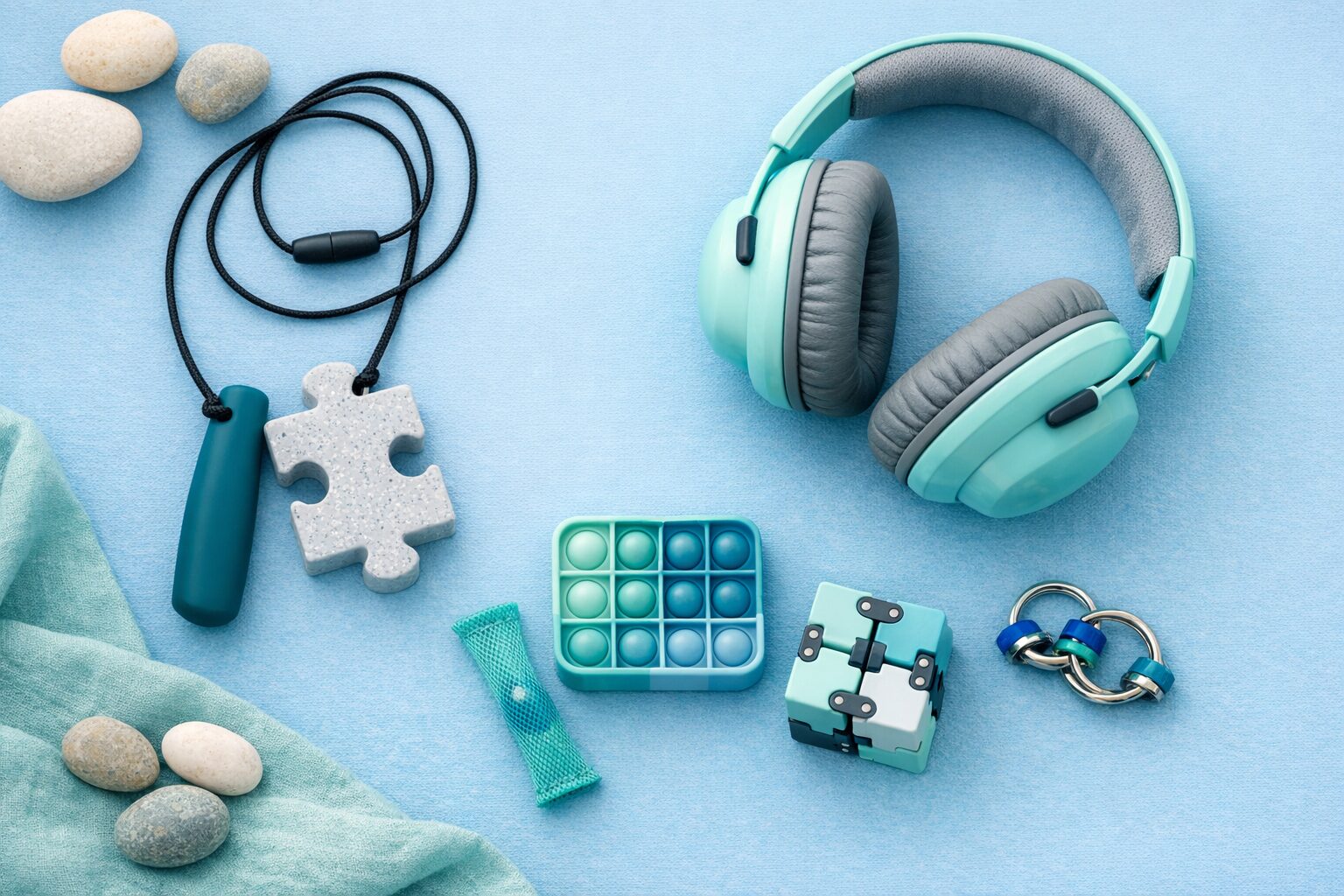
Many children benefit from pairing tools. For example, combine headphones with a chew necklace for oral input or add a bubble set at home to practice calm breathing. Furthermore, supporting overall regulation can help kids engage with language time; you might also explore foundational supports like omega-3 or magnesium glycinate with your child’s provider.
Common Mistakes to Avoid
Skipping the fit test
Buying by NRR alone can backfire. If the cups do not fully seal or the headband pinches, kids will resist. Therefore, always try a short home trial before busy outings.
Only using headphones after a meltdown
Headphones are more effective when used proactively. Additionally, teaching a signal and offering headphones before peak noise gives your child control and reduces stress.
Expecting silence
Even great earmuffs reduce, not erase. Consequently, kids may still notice certain sounds. Pair with a regulation tool, such as a chew necklace or a visual card, to support coping.
Not coordinating with school
Teachers appreciate clear routines. Therefore, share when headphones help most and agree on storage and use times. Furthermore, label them clearly to prevent loss.
Forgetting to practice “on/off” flexibility
Some kids get stuck in “always on.” Additionally, practicing short on/off cycles at home can build tolerance for transitions, which helps during classes and therapy.
FAQ

How do I know if my child needs noise reducing headphones autism kids typically use?
Watch for ear covering, withdrawal in noisy spaces, or difficulty focusing when background sound rises. Additionally, if your child calms once the room is quiet or asks to leave loud places, headphones may be a practical support to try.
Will noise reducing headphones autism kids wear block speech during class?
Passive earmuffs reduce overall noise, but nearby voices are often still audible. Therefore, many students can follow instructions while enjoying less background clatter. Furthermore, coordinate with teachers to decide when to use them, such as independent work time or transitions.
What NRR should I look for with noise reducing headphones autism kids?
For school and community use, a moderate NRR often works well. However, if your child attends very loud events, consider a higher NRR model. Additionally, remember that proper fit matters as much as the rating.
Are headphones safe for long periods?
Many families use them for parts of the day. However, frequent “listening breaks” support flexibility and comfort. Moreover, check for warm ears or pressure marks and adjust fit as needed.
How can I teach my child to ask for headphones?
Use a simple routine. For example, add a headphone icon to your child’s schedule or use a “Headphones Please” card from your Picture Communication Cards. Additionally, practice at home with a short “too loud” role-play so the request becomes familiar.
What if my child refuses headphones?
Start small. Therefore, try a 10–15 second trial at home with a preferred activity. Additionally, let your child decorate the headband or choose the color to build ownership. Furthermore, consider pairing with a chew necklace or a gentle bubble breathing routine.
Can regulation supports help alongside headphones?
Yes, many families layer supports. For example, a chewelry option
Explore More in Sensory & Regulation
Browse all 2 parent guides, product reviews and research summaries in this category.
Browse All Articles →